
Students don't learn only from their teacher. Especially not during adolescence.
Research shows time and again that teenagers derive a significant part of their learning from interaction with peers — through explaining, questioning, discussing and collaborating with others. The teacher plays a crucial role in designing that interaction. But the interaction itself? It happens between students.
Cooperative learning strategies are designed precisely for this. Not as a replacement for the teacher, but as a deliberate structure that makes genuine collaboration possible — even when students don't know each other well, even when motivation is low, even when there is resistance.
What Are Cooperative Learning Strategies?
Cooperative learning strategies are structured ways of working in which students collaborate toward a shared goal — in a way where everyone has an active role and no one can hide.
The difference from regular group work? In regular group work, one student often does most of the work while others watch. In cooperative learning, the structure is designed so that every participant contributes — through role distribution, speaking order, or the way information is shared.
Well-known examples come from the cooperative learning structures of Spencer Kagan — one of the most researched and applied approaches in education worldwide:
Interview in Three Rounds — students interview each other in rotating roles, everyone gets a turn to speak
Stand Up & Sit Down — students respond physically to statements by standing up or remaining seated
Numbered Minds — everyone gets a number, the facilitator calls a number and that member gives the answer
Jigsaw — students become experts in one part of the topic and then teach others in the group
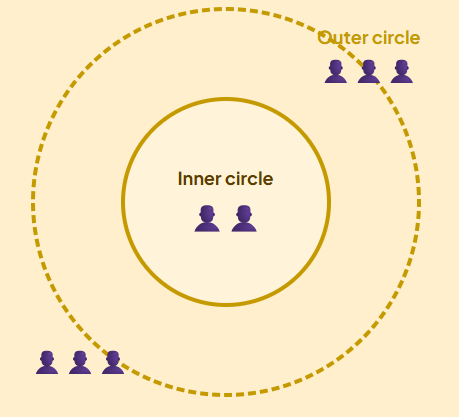
Inner & Outer Circle — two circles facing each other, short conversation with a partner, then the outside circle rotates to a new partner
Why Do Cooperative Learning Strategies Work?
Students Learn From Each Other — Especially During Adolescence
In adolescence, social orientation shifts: peers become more important than adults. This is not an inconvenience to fight against — it is a pedagogical opportunity. When students deliberately collaborate, they not only learn the subject matter better — they also practice skills they will need throughout their lives.
Listening. Explaining. Giving feedback. Asking questions. Working with someone who thinks differently.
Structure Lowers the Threshold
A common misconception: cooperative learning strategies only work when students are motivated or already know each other. But the opposite is true.
A clear, step-by-step instruction helps students overcome the barrier of a mix of laziness and fear. When students know exactly what to do — step by step, visible on the screen or on a card in their hands — the reason not to participate disappears.
What goes wrong: vague, unstructured assignments where some students skip steps and create chaos, while others need more time to understand what is expected of them. The instruction is not the boring part of the activity — it is the foundation on which everything rests.
The instruction is not the boring part of the activity — it is the foundation on which everything rests.
Repetition and Familiarity
Students who already know a cooperative structure start faster, work more calmly and go deeper. Familiarity — knowing what is expected of you — creates a sense of safety. And safety is the condition for learning.
Familiarity creates a sense of safety. And safety is the condition for learning.
That is why at LudensFlow we recommend repeating cooperative structures and returning to familiar ones — even if as a teacher you feel it is getting "boring." For students it is familiar. And familiar feels safe and comfortable.
How Do You Use Cooperative Learning Strategies in the Classroom?
1. Choose a Strategy That Fits Your Goal
Not every strategy fits every moment of the lesson. Think about:
Phase of the lesson — activation, processing, deepening or closing?
Group format — individual, pair, small group or whole class?
Learning goal — recall knowledge, form an opinion, give feedback?
2. Provide a Clear Instruction
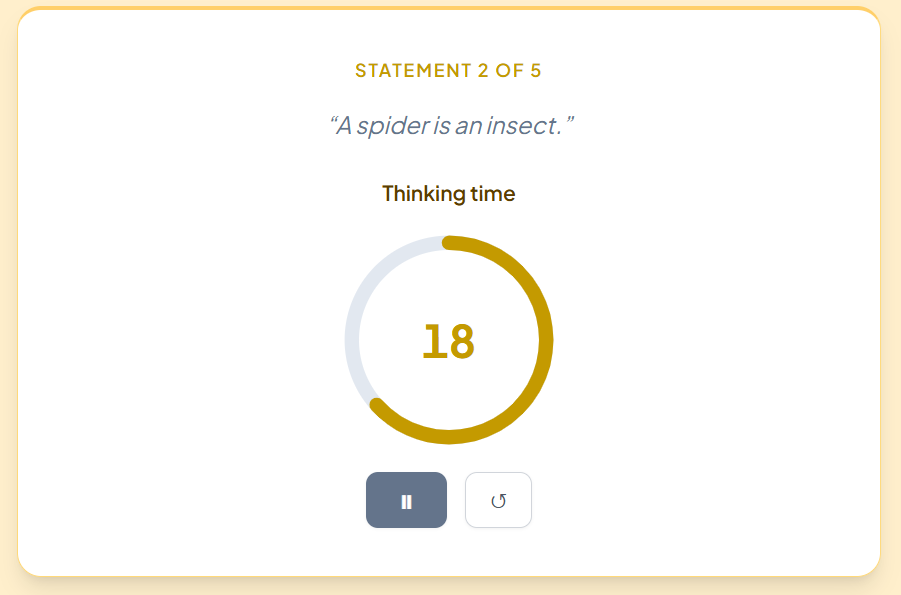
The instruction is everything. A good instruction is broken into clear steps, visible on the screen during the activity, and comes with a timer.
When the instruction is on the screen, you don't need to repeat yourself as a teacher. You can walk around, observe, redirect — and focus your attention on the group in front of you rather than the screen behind you.
3. Vary Group Compositions
Don't always let students choose who they work with. Random or thoughtful grouping — where students work with someone they wouldn't normally choose — increases the learning effect and trains a skill that is indispensable in real life: collaborating with people who are different from you.
4. Close With Reflection
A cooperative activity without reflection is a missed opportunity. Ask not only about the result — ask about the process. How was it to work together? What was difficult? What did you learn from each other?
That reflection is where the real learning happens.
5. Work Together With Colleagues
The power of cooperative learning strategies doubles when multiple teachers in the same school — or the same class — use the same structures. Students don't need to relearn the structure with every teacher. They recognize it. They start faster. They go deeper.
In my own school, we worked together with mentors to introduce new cooperative structures during mentor hours — so students became familiar with them before encountering them in regular subject lessons. It made a noticeable difference.
Cooperative Learning Strategies for Teachers Themselves
Cooperative learning strategies are not only for students. They work excellently in professional contexts too — team meetings, peer consultation and intervision.
At LudensFlow we have specifically added strategies for intervision — methods that have already proven their value in Dutch educational practice. The training of school leaders, for example, has been using intervision formats like the Gossip Method and working with Dominant Ideas for years.
I have been participating in an intervision group for school leaders for two years myself. The Gossip Method is my personal favorite — but the session with dominant ideas was recently so profound that I came away with new insights about myself that I hadn't expected.
That experience is precisely why I included these strategies in LudensFlow — not only for the classroom, but also for the professional development of teachers and teams.
The same cooperative structures you use in the classroom can be applied in team meetings. This way you practice the structure yourself, explore new strategies, and save time — for example by having participants work in pairs on different topics and then making decisions together.
How LudensFlow Helps
LudensFlow is a platform with cooperative and activating learning strategies — ready to use in the classroom or training without lengthy preparation.
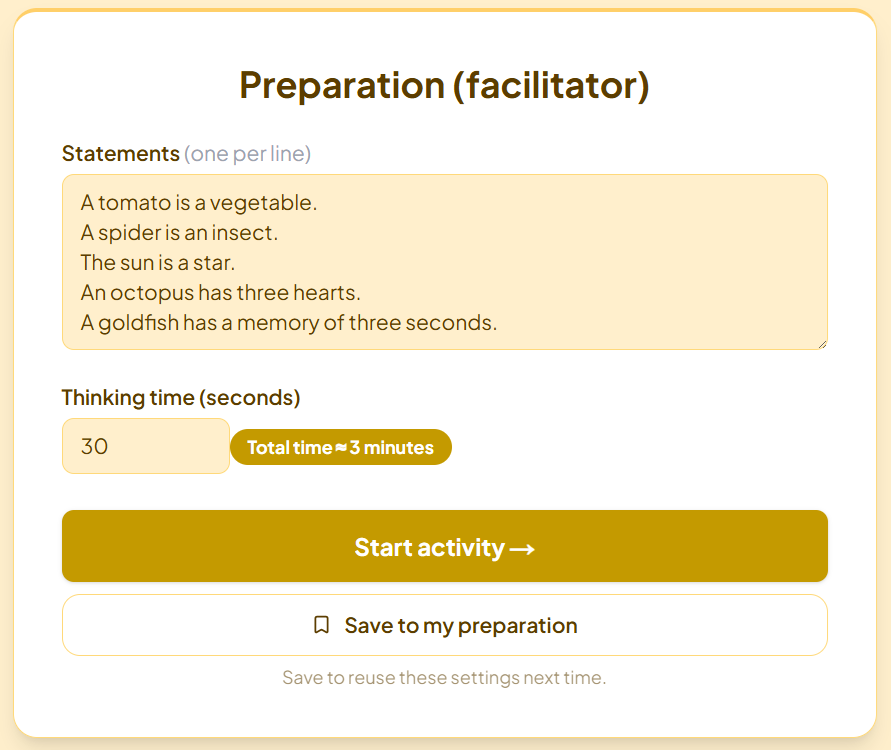
Every strategy includes a clear step-by-step instruction, a timer that runs automatically, and visually clean slides that you project on the interactive whiteboard. No student accounts required. No login hassle. Just open and start.
Prefer paper? The built-in card generator turns any strategy into printable cards for group work — the same clear structure, but in students' hands instead of on the screen.
In addition, LudensFlow offers strategies for intervision and team meetings — so that professional development is built into daily work, not limited to occasional training sessions.
We recommend teachers work together with colleagues who teach the same students. The more teachers in a school use the same cooperative structures, the less explanation is needed — and the more space remains for the real work.
Conclusion
Cooperative learning strategies are not a trend. They are a proven approach that aligns with how students — especially teenagers — learn best: from and with each other, in a safe and clear structure.
The key is not in the strategy itself, but in the execution: a clear instruction, thoughtful grouping, and time for reflection. And repetition — so that cooperative structures become familiar for both students and teachers.
Ready to choose? Here is the full list: 15 cooperative learning structures for your lesson — with steps, timing and group size.
Ready to get started? Browse the activities on LudensFlow — 6 are free without an account, and a free account unlocks 12, free forever.
Further reading: why the platform is called LudensFlow — on Huizinga, play and structure in the classroom — in Why LudensFlow?